


South Indian Food Secrets: Interesting Facts You Must Discover
- abid698
- Oct 4, 2025
- 7 min read
Updated: Mar 14

South Indian cuisine is a very rich, diverse, and healthy culinary tradition in the world. It is famous with its aromatic spices, flavorful curries, and unique preparative techniques, and it is not only popular in India, but also on the whole world. Demand of pure South Indian food has increased tremendously in areas such as Abu Dhabi, and most of the food lovers are constantly seeking a South Indian restaurant Abu Dhabi to reclaim the taste of home or have a taste of the South Indian food.
This blog uncovers the hidden secrets, fascinating traditions, and cultural significance of South Indian food while also guiding you on how to enjoy its authenticity right in the heart of Abu Dhabi.
The Diversity of South Indian Cuisine
South India is made up of five states—Kerala, Tamil Nadu, Karnataka, Andhra Pradesh, and Telangana—each contributing its own unique flavors. While they share a common base of rice, lentils, and spices, every region has its own specialty:
Kerala is famous for seafood delicacies like fish curry and prawn masala, cooked with coconut milk and spices.
Tamil Nadu offers iconic dishes like dosa, idli, sambar, and rasam, known for their tangy and spicy flavor profiles.
Karnataka delights with bisi bele bath (spiced lentil rice), Mysore masala dosa, and a variety of sweets.
Andhra Pradesh is renowned for its fiery hot biryanis and curries, often cooked with red chilies.
Telangana cuisine highlights millet-based dishes and tangy tamarind gravies.
This variation ensures that South Indian is not a single style of cooking, but a cultural experience of five culinary cultures.
The Secret of Spices
The South Indian cooking is based on spices. The food is prepared with a special mixture of spices not only to taste but also to have a health value. Some common ones include:
Mustard seeds for tempering, adding a nutty aroma.
Curry leaves for freshness and digestive properties.
Tamarind for its tangy twist in rasam and sambar.
Dry red chilies for heat and color.
Coconut in grated, ground, or milk form, balancing flavors and adding creaminess.
Interestingly, majority of South Indian families prepare their masala powders-sambar powder, rasam powder and curry powders- and every dish has a home-made flavor to it.
The Health Angle of South Indian Food
The secret of the healthiness of South Indian food is one of the best kept secrets. This cuisine is very nutritious because it includes steamed dishes such as idli, fermented dishes such as dosa batter, and curries that contain a significant amount of lentils such as sambar. Fermented foods are helpful in digestion, and rice and lentils contain the optimal proportion of carbohydrates and proteins.
Cooking is also heart-friendly in the use of coconut oil in Kerala and sesame oil in Tamil Nadu. Most of its dishes are gluten-free and vegan in nature, and they do not compromise with the taste of the dishes.
Breakfast Like a King
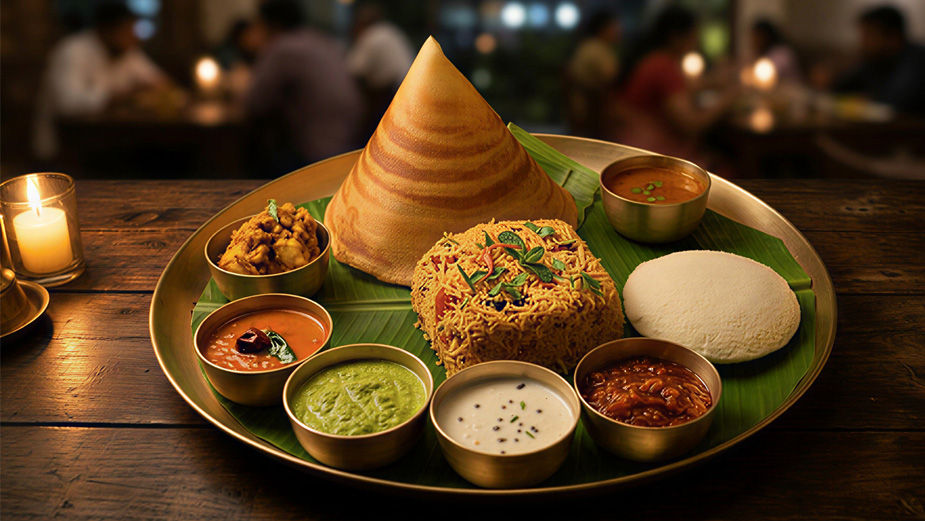
South Indians believe that breakfast is the biggest meal of the day. Foods such as dosa, idli, vada and upma are not only tasty, but also rich in energy. The example of a typical Tamil breakfast is topped with idli, dosa, sambar, chutney, and filter coffee, which make up a complete and nutritious breakfast.
Even today, when you visit a South Indian restaurant Abu Dhabi, the breakfast menu is one of the most popular sections because it perfectly represents the heart of South Indian cooking.
The Famous Filter Coffee
There is no discussion on South Indian food which does not mention filter coffee. this is brewed in a conventional metal filter with dark-roasted coffee beans and chicory, and combined with boiling milk, after which it is poured back and forth between two tumblers to produce froth.
Filter coffee is not only a drink, it is a representative of a culture. In South India, serving filter coffee to a guest is an indication of warmth and hospitality.
Banana Leaves – Nature’s Plate
Eating on a banana leaf is regarded as one of the most intriguing traditions. South Indians are of the opinion that the leaf does not just improve the flavor, but also possesses antibacterial effects. It is also a tradition to serve hot rice, curries and pickles on a banana leaf during weddings, festivals and feasts.
Indeed, there are numerous restaurants across the globe emulating this original style to provide the real South Indian taste to the customers.
Festive Feasts – The Sadya Tradition
The well known Sadya in Kerala is a large meal that is served on the Onam and other eventualities. It may contain 24 dishes on a banana leaf and they may include rice, curries, vegetables, pickles, and payasam (sweet dessert).
It is not only a feast of food but an event of community, tradition and celebration. Every food has also a symbolic meaning and is arranged in a particular sequence in the leaf.
South Indian Street Food Culture
While dosas and idlis are popular in restaurants, the street food culture in South India is equally exciting. Dishes like sundal (chickpea salad), bajji (vegetable fritters), and bondas (spicy potato dumplings) are common roadside snacks.
These type of South Indian bites presented in the form of street food are commonly found in food festivals in such locations as Abu Dhabi, allowing the locals and tourists to experience the real flavors.
The Role of Rice
The South Indian staple food is rice and it comes in an infinite number of varieties, steamed rice, lemon rice, tamarind rice, curd rice etc. It is also roasted into the flour to make dosas and idlis.
Among other interestings is the fact that in South India, rice is not only food but sacred. It is used in religious practices, offering to the temples, and marriages.
South Indian Desserts – Sweet Secrets
Though known for savory dishes, South India also has an array of irresistible desserts:
Payasam (sweet milk pudding)
Kesari bath (semolina dessert)
Mysore Pak (ghee and gram flour sweet)
Unniyappam (banana fritters)
Each sweet dish is unique to its region, carrying centuries of tradition and family recipes.
South Indian Food in Abu Dhabi
Having a big Indian population in UAE, South Indian food has been well established in Abu Dhabi. Demand is quite high in small restaurants to high-end restaurants of the state in the consumption of authentic dosas, sambar, and Kerala-style curries.
In search of a South Indian restaurant Abu Dhabi, there will be places where all types of food such as traditional breakfast or elaborate thali meals will be served. These restaurants are a savior to those who miss a home-cooked meal.
Actually, numerous food aficionados concur that the best South Indian restaurant in Abu Dhabi does not only deliver tasty foodstuff but also the traditional flavor of hospitality presentation and authenticity that gives the food its special tastes.

Why South Indian Food is Loved Worldwide
The South Indian food has swept the world with its diversity, healthiness, and memorable tastes. The foods are also vegan, vegetarian and even non vegetarian, thus accommodative to everyone.Its reliance on natural ingredients, spices, and age-old cooking techniques ensures that it remains timeless.
Tips to Experience Authentic South Indian Food in Abu Dhabi
If you’re in Abu Dhabi and eager to enjoy South Indian food, here are some tips:
1. Start with the Breakfast Menu
South Indians are fond of breakfast, and the food served includes idli, dosa, vada, and upma. These products are light, nutritious, and full of flavor, thus, being the most appropriate to obtain the feeling of authenticity.
2. Try Meals Served on Banana Leaves
A good number of the original restaurants in Abu Dhabi continue to offer traditional thali on banana leaves. This does not only add flavor but also reinvites the culture of dining experience that is experienced in South India.
3. Don’t Miss Filter Coffee
Skip normal coffee and have South Indian filter coffee, which is made through an old-fashioned metal filter with chicory and milk. It is not just a drink, but a symbol of the South Indian hospitality.
4. Explore Beyond Dosas and Idlis
Dosa as well as idlis are famous but traditional cuisine is a lot more than that. Taste Kerala region by having appam with stew, Chettinad curries, avial or Kerala style seafood.
5. Visit During Festival Seasons
Festivals like Onam and Pongal bring special feasts and seasonal delicacies to South Indian restaurants. Dining during these times offers a rare chance to enjoy traditional “Sadya” spreads and festive sweets.
Conclusion
South Indian cuisine is more than just food—it’s a celebration of culture, tradition, health, and flavor. From banana leaf meals to filter coffee, every element carries a story that connects people to their roots.
For those in Abu Dhabi, the good news is that authentic South Indian flavors are never too far away. Whether you’re craving a simple dosa for breakfast or a full traditional feast, visiting a South Indian restaurant Abu Dhabi gives you the chance to enjoy one of the world’s most diverse and fascinating cuisines right in the UAE.
So, the next time you savor that crispy dosa or sip on frothy filter coffee, remember; you’re experiencing centuries of tradition, perfected over time, and lovingly preserved in every bite.
Discover the Best South Indian Restaurant in Abu Dhabi
Tags: South Indian Cuisine Abu Dhabi, Authentic South Indian Food, Best South Indian Restaurant Abu Dhabi, South Indian Veg Restaurant Abu Dhabi, South Indian Non Veg Restaurant Abu Dhabi, Dosa And Idli Abu Dhabi, Traditional South Indian Meals, Kerala Style Food Abu Dhabi, Tamil Nadu Cuisine Abu Dhabi, Andhra Style Food Abu Dhabi, Indian Restaurant Abu Dhabi
Faq
Do you serve authentic vegetarian South Indian meals?
Yes, we specialize in traditional South Indian vegetarian dishes, made fresh daily with authentic regional recipes.
Can I order South Indian food for delivery in Abu Dhabi?
Absolutely—our full menu is available for convenient delivery across Abu Dhabi.
Do you offer festival specials like Onam Sadya?
Yes, we celebrate regional festivals with special vegetarian spreads like Onam Sadya and other festive meals.
Is your filter coffee prepared the traditional way?
Yes, our filter coffee is brewed using freshly ground South Indian coffee beans and served in the authentic metal tumbler and davara style.


Comments